
Check the claims before you trust the site
Foreign registration is not an Australian licence, and crypto payments do not place an offshore casino under local oversight.

How Offshore Crypto Casinos Operate Outside Australia’s Framework
An offshore crypto casino may present itself as a website where you can create an account, view games and make payments using digital currency. That description says how the service is arranged, not whether it is authorised to provide online casino gambling to people in Australia. Offshore crypto casinos are not licensed here and sit outside Australia’s regulatory framework. Their websites and payment systems may be operated from overseas, but that does not bring them under Australian oversight.
The distinction matters because an overseas location is not an Australian licence. A site may display information about a foreign registration or describe its services as international, yet neither statement makes it regulated by Australian authorities. The Interactive Gambling Act 2001 is the relevant Australian framework for online gambling, and the Australian Communications and Media Authority (ACMA) regulates online gambling under that Act. Offshore operators are not licensed in Australia.
This leaves a gap between what a website says about itself and what Australian oversight can provide. ACMA monitors online gambling activity, including activity involving cryptocurrency, but monitoring does not turn an offshore service into a locally regulated one. Nor does accepting Bitcoin or another digital currency change the operator’s status. The payment method and the regulatory position are separate matters.
Top Operators
Choosing a crypto casino in Australia means checking the details that matter to you, including licensing, minimum deposits and any stated payout times. Use these short verdicts as a starting point for your own checks before deciding where to play.
-
Playfina Casino
- License
- Curacao eGaming (Hollycorn N.V., since 2017)
- Min. deposit
- A$20-30 (depends on the offer)
Playfina is listed with a Curacao eGaming licence held by Hollycorn N.V., which dates back to 2017. You can expect the stated minimum deposit to vary by offer, at A$20–30.
-
7Bit Casino
- License
- Curacao, operated by Dama N.V.
7Bit Casino is listed as operating under a Curacao licence through Dama N.V. This gives you a clear licensing and operator detail to consider.
-
LuckyVibe
- License
- Curacao Gaming Control Board OGL/2023/176/0095 (Hollycorn N.V.)
LuckyVibe is listed with a Curacao Gaming Control Board licence, number OGL/2023/176/0095, held by Hollycorn N.V. The licence details are the main distinguishing facts available here.
-
Thor Casino
- License
- Curacao – Antillephone N.V. (Versus Odds B.V.)
- Min. deposit
- EUR 20
Thor Casino is listed under a Curacao licence associated with Antillephone N.V. and Versus Odds B.V. Its stated minimum deposit is EUR 20.
-
House of Pokies
- License
- international iGaming licence – jurisdiction not named in the source
- Payout speed
- PayID 1-24 hours
- Min. deposit
- A$30 (PayID from A$10)
House of Pokies lists PayID payouts at 1–24 hours and a minimum deposit of A$30, or A$10 when using PayID. Its source describes the licence as international but does not name the jurisdiction.
-
LevelUp Casino
- License
- Curacao eGaming OGL/2023/174/0082 (Dama N.V.)
- Min. deposit
- A$15
LevelUp Casino is listed with Curacao eGaming licence OGL/2023/174/0082, held by Dama N.V. Its stated minimum deposit is A$15.
-
SkyCrown
- License
- Tobique Gaming Commission
- Payout speed
- crypto ~10-15 minutes, fiat 1-5 days
- Min. deposit
- A$30
SkyCrown lists a Tobique Gaming Commission licence and a minimum deposit of A$30. The stated payout estimates are about 10–15 minutes for crypto and 1–5 days for fiat.
-
WinSpirit Casino
- License
- Curacao eGaming OGL/2024/923/0383 (Antillephone N.V.)
- Min. deposit
- A$30
WinSpirit Casino is listed with Curacao eGaming licence OGL/2024/923/0383, held by Antillephone N.V. Its stated minimum deposit is A$30.
-
Kingmaker
- Payout speed
- crypto ~90 minutes, fiat 1-5 days
- Min. deposit
- A$30
Kingmaker lists crypto payouts at about 90 minutes and fiat payouts at 1–5 days. Its stated minimum deposit is A$30.
-
Lucky Dreams
- License
- Curacao
- Min. deposit
- A$20 (POLi)
Lucky Dreams is listed with a Curacao licence and a minimum deposit of A$20 when using POLi. Those are the available details to consider for this entry.
What the offshore distinction means in practice
With a domestic regulated service, local rules and oversight apply to the operator. An offshore crypto casino does not offer that same Australian regulatory relationship. If you have a problem with an account, a transaction or a disputed outcome, you should not assume that an Australian regulator can resolve it as it could with a service operating within the local framework. The site may set its own terms and procedures, while Australian authorities do not license it as an Australian online casino.
That difference can be easy to miss when a website is designed for international users or has a polished interface. Language, Australian-dollar displays, familiar payment instructions or references to popular games do not establish local authorisation. Nor does a search result describing a site as a top crypto casino online. Marketing descriptions are not regulatory status. A careful reading should separate what the platform claims from the question of whether it is licensed in Australia.
Cryptocurrency can also make the service feel detached from ordinary consumer processes: transfers happen through a blockchain, and the operator may be based in another jurisdiction. But the use of a wallet does not create Australian consumer protections or guarantee that a payment can be reversed if something goes wrong. Treating crypto as a technical feature rather than a safeguard helps keep the risks in proportion.

The same caution applies to a new online crypto casino. A recent launch, a redesigned website or a growing collection of crypto pokies does not indicate that Australian authorities have approved the service. A review may describe features or report a reviewer’s experience, but that is not a substitute for regulatory oversight. Read such material as commentary, not as proof of Australian licensing or protection.
Oversight does not mean approval
ACMA’s role is to regulate online gambling under the Interactive Gambling Act, and its monitoring includes services that involve cryptocurrencies. That does not mean every offshore platform has been individually assessed, approved or made safe for Australian users. Being visible online is not evidence of compliance, and continued access to a website should not be taken as official approval.
Access can also change. ACMA can direct internet service providers to block prohibited offshore gambling sites, so a domain may become unavailable or change without notice. A site appearing under a different address does not, by itself, alter its regulatory status. If an address stops working, that is not a reason to assume another address is authorised.
The practical point is straightforward: an online crypto casino operating offshore is not part of Australia’s licensed domestic framework, even if it accepts Australian users or cryptocurrency. ACMA’s monitoring and enforcement role does not provide a local licence, and the platform should not be treated as offering the protections associated with Australian regulation. If you are considering what a website’s claims mean, keep its location, payment options and promotional language separate from the question of Australian oversight.
What Australian Law Means for Players
Australian law draws a distinction between the conduct of gambling operators and the actions of individual players. Under the Interactive Gambling Act 2001, operators must not provide real-money online casino games to people located in Australia. That restriction covers casino-style services such as pokies, poker and table games; it is directed at the service being offered, not framed as a criminal offence for a person who accesses an offshore casino.
For you as a player, the practical point is that gambling at an offshore online casino is not, by itself, illegal under the stated Australian rules. The law targets operators rather than individual customers, and accessing an offshore platform is not a criminal offence for a user. That distinction matters: the prohibition on operators should not be misread as a rule that automatically makes a player’s act of placing a bet a crime.
It also does not mean that an offshore service is approved for Australians. Offshore crypto casinos are not licensed by Australian authorities and sit outside Australia’s regulatory framework. You do not get Australian regulatory oversight or consumer protection through them. The fact that an individual player is not committing a criminal offence by accessing such a service is not a guarantee that the service is safe, reliable or able to resolve a dispute in your favour.
The legal position therefore has two parts that should be kept separate. The Interactive Gambling Act restricts operators from supplying prohibited casino services to people in Australia. At the same time, the stated position for an individual is that using an offshore online casino is not a criminal offence. Neither point converts an offshore site into an Australian-regulated casino, and neither should be taken as an endorsement or recommendation to use one.

The same distinction applies when the service uses cryptocurrency. Paying with crypto does not change the basic character of real-money online casino gambling, nor does it remove the operator-facing restriction in the Act. A site’s use of digital currency is not evidence that it is authorised to provide casino games to Australian residents. For a player, however, the use of cryptocurrency does not make access itself a criminal offence under the position described above.
Age is a separate requirement. You must be at least 18 to gamble. Being old enough does not alter the rules for operators, and the fact that the law does not criminalise an individual’s access to an offshore casino does not remove the minimum age requirement. If you are under 18, do not gamble.
It is worth avoiding two opposite assumptions. The first is that because online casinos are prohibited from serving people in Australia, every player who reaches an offshore site is committing a crime. That is not the distinction Australian law makes. The second is that because an individual player is not committing a criminal offence, offshore casino gambling is a regulated or protected activity. It is not: offshore operators are outside Australian regulation and do not provide Australian consumer protection.
This is a limited explanation of the legal position, not personal legal advice. If a particular situation involves more than simply accessing an offshore casino—for instance, a separate dispute or another activity—you may need advice on that specific matter. For the central question, keep the roles clear: Australian law prohibits operators from offering online casino games to people in Australia, while it does not make an individual player’s use of an offshore casino a criminal offence.
Crypto Slots: What You Can—and Cannot—Verify
A casino’s acceptance of cryptocurrency and the games it offers are separate claims. A site may describe itself as a crypto casino because it accepts digital currency; that description alone does not establish which games are available, whether they include pokies, or whether a particular title can be played there. Nor does the phrase “crypto slots” mean the game itself uses cryptocurrency. It may simply refer to ordinary slot-style games offered by a site that also accepts crypto.
That distinction matters when you are trying to confirm a specific game. A promotional page, search snippet or copied list can repeat a title without showing that it is currently available to Australian visitors. A name in a catalogue is not proof that the game loads, that its rules match the description, or that the listed version is the one you would encounter. Without checking the game itself and its details, those points remain unconfirmed.
The same care applies to claims about how a game works. Terms such as “provably fair” suggest that an outcome can be checked using a defined method, but the label by itself does not demonstrate that the method is available or that it applies to every game on a site. A claim about randomness, fairness or return should be tied to clear information about the particular game and how the claim can be tested. A general statement on a casino page is not a substitute for those details.
There is also a difference between a game having a crypto-themed appearance and using cryptocurrency as part of its mechanics. Graphics or references to coins do not show that a game handles deposits, pays out winnings in crypto, or uses a blockchain to determine outcomes. Those are distinct features, and each needs its own explanation. If a description blurs them together, it is difficult to tell what the game actually does.

For Australian readers, another limit is important: offshore crypto casinos are not licensed in Australia and sit outside the Australian regulatory framework. They do not provide the consumer protections associated with a locally regulated casino service. The fact that a game is described as available on an offshore site does not make that service regulated or protected in Australia. You must be at least 18 to gamble.
A useful way to read a game description is to separate what it asserts from what it demonstrates. Does it identify the game, explain its rules and provide details specific to that title? Is a fairness claim supported by a method you can understand, rather than a slogan? Does the information clearly distinguish the game’s features from the casino’s payment options? If those details are absent or vague, treat the claim as unconfirmed rather than filling in the gaps yourself.
The wording “crypto slot machine” can also create a false impression that there is one standard kind of product. In practice, the phrase can be used loosely for a slot-style game associated with a crypto casino, a game with crypto imagery, or a claim about crypto-based technology. Those meanings are not interchangeable. A page should explain which one it means before you rely on its description.
No catalogue of titles can be treated as confirmed merely because a page promises a wide choice of crypto slot games. Specific availability and game features need to be established title by title. Keep that distinction in mind when reading claims about pokies, crypto payments and fairness: each describes something different, and none proves the others.

How to Assess a Crypto Casino Without Relying on Rankings
A ranking can make a choice look simple: one site appears first, another is labelled a close alternative, and a badge suggests the decision has been settled. But a position on a page is not proof that a casino is safe, fair or suitable for you. Treat “best” as a claim to examine, not a finding you can rely on.
That matters particularly in Australia. Offshore crypto casinos are not licensed here and operate outside the Australian regulatory framework. A ranking does not change that position or give you the protections associated with a locally regulated service. No label such as “recommended” or “top choice” can turn an offshore platform into an Australian-licensed casino.
Look for evidence behind each claim
Before giving weight to a review or comparison, check whether it explains how its conclusions were reached. Does it distinguish observed information from the operator’s own marketing? Does it show what was examined, when, and under what conditions? Are drawbacks discussed alongside favourable features, or does every entry read like a sales pitch?
A detailed explanation is more useful than a score with no method. Even then, a review is not a guarantee: information can become outdated, and a site’s presentation does not establish how it will handle a particular player’s account or funds. Be cautious when an article uses strong assurances without showing what supports them.
You can also separate statements into three groups:
- Checkable details: claims about rules, payment processes or game information that can be compared with clear documentation.
- Promotional language: descriptions such as “trusted,” “fast” or “leading” that mean little without evidence and defined standards.
- Personal impressions: opinions that may help explain one reviewer’s experience but cannot predict yours.
This simple distinction helps prevent an attractive phrase from being mistaken for independent verification.
Ask what the ranking measures
“Best” has no single meaning. A ranking may prioritise a large game selection, a particular payment method, ease of use or promotional offers. Those priorities may not match yours, and an overall score can conceal the trade-offs.
Look for the stated criteria and consider whether they answer practical questions. Is the comparison assessing transparency, or mainly listing features? Does it explain how a claim was checked? Are limitations made visible, or are they buried beneath praise? If the page does not explain its standards, its order is difficult to interpret.
Be especially careful with tables that present many platforms as though they have been assessed on equal terms. A uniform layout can create an impression of consistency even where the underlying evidence differs. Read the explanation for each entry rather than assuming that a higher position means stronger safeguards.
Do
- Check if the review explains how conclusions were reached
- Distinguish observed information from marketing
- Look for stated criteria and limitations
Don't
- Treat a ranking position as proof of safety
- Rely on labels like "recommended" or "top choice"
- Assume a uniform layout means consistent evidence
Keep your own decision separate
A “best crypto casino Australia” label may sound tailored to local readers, but wording alone does not establish that a platform is appropriate for someone in Australia. Confirm what the service actually states about its status and conditions, and do not treat its availability to visit as proof that it is regulated locally.
Before acting on any recommendation, pause over what would matter if something went wrong: whether the terms are understandable, whether important claims can be checked, and whether you are comfortable with the risks of using a service outside Australia’s framework. If the information is unclear, that is a reason to slow down, not to let a ranking fill in the gaps.
Promotional language can also blur the difference between a platform’s features and the protections available to you. A polished site, a high score or repeated praise does not establish independent oversight. The useful question is not simply which crypto casino site appears first, but what the evidence actually supports—and what remains a claim.
No-Deposit Bonuses: Check the Terms Before You Act
A “no-deposit” label can sound straightforward: an offer that does not require you to fund an account first. But the label alone does not tell you whether an offer is active, who can claim it, or what conditions apply. Searches for crypto casino no-deposit bonuses should be treated as a starting point for checking a claim, not proof that a bonus is available to you.

Before acting on any promotion, look for its full terms on the casino’s own website. Check whether the offer is limited by location, account eligibility, registration steps or a code, and whether it has an expiry or other conditions. If those details are absent, unclear or inconsistent across pages, you cannot reliably judge what is being offered. Do not assume that a summary, banner or third-party description tells the whole story.
Pay particular attention to what “bonus” means in practice. The terms should explain whether the promotional credit can be used only for certain games, whether winnings are subject to wagering requirements, and what rules apply before funds can be withdrawn. They should also state any limits, verification requirements and circumstances in which the offer can be withdrawn. A bonus described as free is not necessarily cash you can withdraw, and a claim of no deposit does not mean there are no other conditions.
A page calling something the best crypto casino no-deposit bonus does not establish that it is the best option—or that its details have been checked. Rankings and promotional descriptions may reflect commercial interests. Compare the actual terms rather than relying on a headline, and do not provide personal or payment details simply to discover conditions that should have been disclosed clearly.
There is an additional concern for people in Australia. Offshore crypto casinos are not licensed here, sit outside Australia’s regulatory framework and do not provide Australian consumer protection. The Interactive Gambling Act 2001 prohibits operators from supplying real-money online casino games to people in Australia. An advertised bonus does not change that position or make an offshore service regulated locally. You must be at least 18 to gamble.
If the terms cannot be found, do not treat the offer as confirmed. If they are available but difficult to understand, pause rather than relying on an informal explanation from a promotional page. You should be able to identify the conditions before deciding whether to proceed. This is especially important when an offer is presented alongside invitations to play casino games with cryptocurrency: promotional language does not establish that the service is lawful for operators to provide in Australia, or that you have a route to resolve a dispute.
No-KYC Claims Do Not Guarantee Anonymity
A “no-KYC” label can sound like a promise that you will not have to identify yourself. It is safer to treat it as a claim about a platform’s stated process, not proof that you can use the service anonymously. Paying with cryptocurrency does not, by itself, remove identity checks or establish what information an operator may request.

A crypto casino may ask for identity details as part of account access, payment handling or a later review. The timing and requirements can vary, so do not assume that a smooth sign-up means checks will never follow. Nor should you send funds on the expectation that a no-KYC claim guarantees uninterrupted access to your account or withdrawals.
There is a separate issue for people in Australia. Offshore crypto casinos are not licensed by Australian authorities and sit outside the country’s regulatory framework. That means Australian consumer protections do not apply to them as they would to a locally regulated service. A no-KYC label does not change that position or make an operator accountable to Australian regulators.
The Australian Communications and Media Authority monitors online gambling, including activity involving cryptocurrency, and can direct internet service providers to block prohibited offshore gambling sites. A site’s availability can therefore change, regardless of what its account or verification claims say. Do not treat access to a platform as evidence that it is authorised or that your funds are protected.
If you are considering a service that advertises itself as a no-KYC crypto casino, read its own terms carefully before creating an account or transferring anything. Look for clear information on identity checks, account restrictions and what happens if a check is requested. If the wording is vague or the claim is broader than the terms support, do not rely on the label.
You must be at least 18 to gamble. Keep your personal details and account security in mind, and do not provide identity documents or payment information unless you understand who is requesting them and why. Cryptocurrency is a payment method, not a guarantee of privacy, anonymity or a particular verification policy.
Reviews and Free Spins: Separate Claims from Verified Details
A casino review can sound definitive while offering little that you can independently confirm. A favourable verdict, a star rating or a claim that a site is among the best does not establish that its games, services or promotions have been checked. Treat those statements as the reviewer’s claims, not as proof of how a particular platform works.
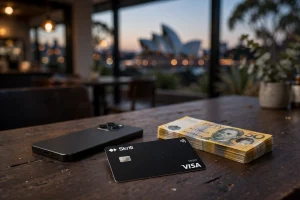
The same caution applies to pages promoting free spins at crypto casinos. A headline may suggest that spins are available, but it does not establish that an offer is active, who can use it, or what conditions apply. Do not assume that a promotion exists simply because it appears in a review, a comparison page or a search result. Details can be copied between pages, left unchanged after an offer ends, or presented without enough context to judge what is actually being offered.
Nor does a free-spin claim tell you whether the associated games are available to you or whether the platform is subject to Australian oversight. Offshore crypto casinos are not regulated by Australian authorities and do not provide Australian consumer protection. A review’s endorsement cannot change that position or make an offshore service locally authorised.
Look for a clear distinction between what the reviewer has personally tested, what the operator claims, and what remains uncertain. If a page does not identify the basis for its conclusions, or repeats promotional language without supporting detail, its verdict should carry little weight. This is especially important when a review uses phrases such as “best” or “trusted” without explaining what those labels mean.
A free-spins promotion is not a reliable sign of a casino’s quality, fairness or safety. Do not treat promotional wording as a guarantee of value, and do not let a review’s confident tone substitute for information you can verify. If the details are unclear, the sensible response is to withhold judgement rather than fill in the gaps yourself.
You must be at least 18 to gamble. That age requirement still applies when a site uses cryptocurrency or advertises free spins. No review or promotion removes it.
Legitimacy, Site Blocking, and the Limits of Casino Lists
In Australia, “legitimate” needs a clear meaning. An offshore crypto casino is not licensed here and sits outside the Australian regulatory framework. A polished website, a cryptocurrency payment option or a place on a directory does not give it approval from Australian authorities or the consumer protections that come with local regulation.

That distinction matters when you see a list presented as the leading or most legitimate crypto casinos. A ranking can reflect a publisher’s selection, not a finding that a platform is authorised in Australia. Without reliable, operator-specific evidence, it is not possible to substantiate a list of casinos as legitimate options for Australian residents. Treat the label as a claim to examine, not as proof of local status.
Access can change as well. The Australian Communications and Media Authority (ACMA) directs internet service providers to block prohibited offshore gambling sites. A domain that once opened may later be inaccessible, and a site’s address may disappear without notice. ACMA’s blocking activity has affected hundreds of domains by mid-2025, according to a specialist industry review; that figure is time-bound and should not be read as a complete or current count.
A block is not a certification process. If a site remains accessible, that does not establish that it is lawful for operators to provide casino services to people in Australia, or that the platform has been checked by an Australian regulator. Likewise, a listing that calls a site “top” or “trusted” cannot replace evidence about its status or the practical protections available to you.
Be cautious with directories that imply their entries are all legitimate simply because they appear together. Check what the label actually means and whether the page explains its basis. If it does not distinguish Australian authorisation from an offshore operator’s claims, the wording may give you more confidence than the information supports.
There is no dependable Australian-approved list to infer from a collection of offshore names. ACMA’s directions can also affect access after a list is published, so a listing may become out of date even if it once linked to a working domain. Do not treat availability, ranking or a “legit” badge as evidence of Australian oversight.
Cryptocurrency Deposits: Supported Coins, Networks, and Value Risk
Bitcoin and Ethereum are accepted by almost all crypto casinos, while Litecoin, Tether (USDT), Ripple and other cryptocurrencies are also commonly supported. Offshore platforms may accept several kinds of coins, but that does not mean every casino accepts the same assets or makes them available for both deposits and withdrawals. Check the payment details shown by the specific platform before transferring anything; a general list of supported currencies is not confirmation of its current options.

The network matters as much as the coin. Some assets can be sent through different blockchain networks, and the sender and recipient must use a matching network. A transfer to the wrong network may not reach the account and could be difficult or impossible to recover. Before confirming, compare the asset and network selected in your wallet with the exact deposit instructions on the receiving platform. Do not rely on the currency name alone, and do not send funds if the instructions are unclear.
Crypto prices can change while a deposit is being made or between depositing and withdrawing. The amount you receive back may therefore have a different value in Australian dollars from the amount you initially sent, even if the number of coins has not changed. A stablecoin is designed to track another currency, but that label does not remove the need to check its network or account for transfer and price risks.
These payment mechanics do not make an offshore casino secure or regulated. Offshore crypto casinos are not licensed by Australian authorities and do not provide Australian consumer protection. Cryptocurrency is not a safeguard against problems with a platform or a mistaken transfer. You must be at least 18 to gamble, and checking a payment method does not establish that using a particular site is lawful or protected.

Crypto Gambling in 2026: Regulatory Changes and Tax Considerations
For Australians considering crypto gambling in 2026, the rules for domestic wagering services and the tax treatment of cryptocurrency are separate issues. Since 11 June 2024, licensed Australian wagering services have been prohibited from accepting digital-currency transactions for wagering, as well as credit-card payments. That restriction concerns those licensed services; it should not be taken as evidence that every offshore crypto casino follows the same payment rules or is authorised to serve Australians.
The tax position can also be less straightforward than the treatment of a gambling win alone. Recreational gambling winnings are generally not taxed as ordinary income, and the Australian Taxation Office does not treat crypto received from a gambling or lottery win as ordinary income. However, cryptocurrency is treated as a capital gains tax asset. Its later use or disposal can therefore have tax consequences.
A crypto deposit may itself count as a disposal and a CGT event, separate from any result at the casino. If you receive crypto as a win, its value when you receive it becomes its cost base. Selling, swapping or spending that crypto later can trigger CGT rules. In other words, a win that is not ordinary income does not make later transactions with the cryptocurrency tax-free.
If you hold Bitcoin as an investor for more than 12 months, the 50% CGT discount applies to gains. Tax treatment depends on your circumstances, so keep records of relevant transactions and seek advice from a qualified tax professional if you are unsure how a deposit or later disposal applies to you. A payment restriction on licensed domestic wagering services does not remove these personal tax considerations.
What should I check before depositing on an offshore crypto casino from Australia?
Check whether the casino is licensed in Australia: offshore crypto casinos are not, so you should not expect Australian regulatory oversight or consumer protection. Also remember that depositing crypto can itself trigger a capital gains tax event.
Can a crypto casino balance change in value?
Yes. Because cryptocurrency is a CGT asset, its value can change; the value when you win crypto becomes its cost base, and later selling, swapping or spending it can trigger capital gains tax rules.
Which crypto is best for casino deposits and withdrawals?
Litecoin or TRC-20 Tether are suitable if you prioritise quick confirmations and low fees. Bitcoin may suit larger, less frequent withdrawals where a longer wait is not a concern.
How fast are crypto withdrawals from Australian-facing casinos?
Litecoin and TRC-20 Tether are noted for quick confirmations and are recommended for faster payouts. Bitcoin may involve a wait of around half an hour.