
Check the details before choosing where to play
A practical guide to comparing pokies information, checking venues, and understanding what RTP can—and cannot—tell you.
What “best” can—and cannot—tell you about pokies
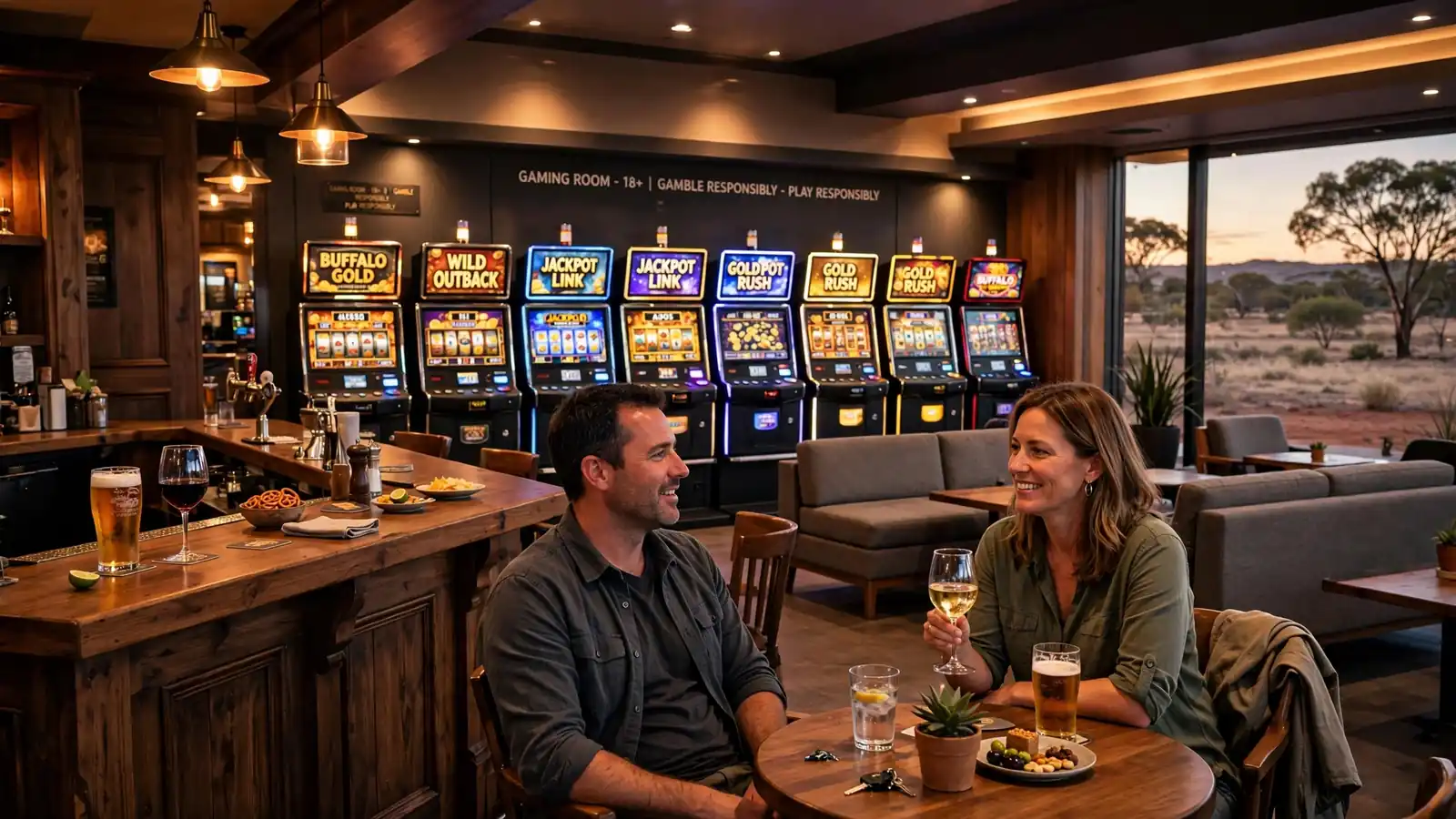
“Best” can mean different things depending on what you want from a pokie. You might be looking for a particular style of play, clear rules, or a return-to-player figure that appears favourable. Those preferences can help you compare information, but they cannot identify a game that will produce a win. A list labelled “best-paying pokies in South Australia” should therefore be treated as a claim to examine, not as a promise about what will happen when you play.
Return to player, or RTP, is a statistical measure of the proportion of wagers a game is designed to return over a very large number of plays. It is not a forecast for an individual session. A figure shown in a game description does not tell you how much you will get back from a particular set of spins, and a higher stated RTP does not make a win due.
There is another complication: the same pokie may not use the same RTP setting everywhere. A specialist review reports that some providers give casinos a choice of settings for a game. That means the title alone may not tell you which return percentage applies in a particular setting. If a comparison gives an RTP figure, check whether it identifies the version or setting it is describing. Without that context, figures attached to the same game may not be directly comparable.
Top Operators
If you’re looking for pokies in South Australia in 2026, check the details that matter to you before choosing where to play. This guide offers a concise reference to the listed operators based on the available information.
-
Playfina Casino
- License
- Curacao eGaming (Hollycorn N.V., since 2017)
- Min. deposit
- A$20-30 (depends on the offer)
Playfina Casino is licensed by Curacao eGaming and has operated under Hollycorn N.V. since 2017. Its minimum deposit is A$20–30, depending on the offer.
-
7Bit Casino
- License
- Curacao, operated by Dama N.V.
7Bit Casino is operated by Dama N.V. and holds a Curacao licence.
-
LuckyVibe
- License
- Curacao Gaming Control Board OGL/2023/176/0095 (Hollycorn N.V.)
LuckyVibe holds a Curacao Gaming Control Board licence, OGL/2023/176/0095, under Hollycorn N.V.
-
Thor Casino
- License
- Curacao – Antillephone N.V. (Versus Odds B.V.)
- Min. deposit
- EUR 20
Thor Casino is licensed by Antillephone N.V. in Curacao and operated by Versus Odds B.V. Its minimum deposit is EUR 20.
-
House of Pokies
- License
- international iGaming licence – jurisdiction not named in the source
- Payout speed
- PayID 1-24 hours
- Min. deposit
- A$30 (PayID from A$10)
House of Pokies lists an international iGaming licence, though the jurisdiction is not named in the source. PayID payouts are stated as taking 1–24 hours; the minimum deposit is A$30, or A$10 with PayID.
-
LevelUp Casino
- License
- Curacao eGaming OGL/2023/174/0082 (Dama N.V.)
- Min. deposit
- A$15
LevelUp Casino is licensed by Curacao eGaming under OGL/2023/174/0082 and operated by Dama N.V. Its minimum deposit is A$15.
-
SkyCrown
- License
- Tobique Gaming Commission
- Payout speed
- crypto ~10-15 minutes, fiat 1-5 days
- Min. deposit
- A$30
SkyCrown holds a Tobique Gaming Commission licence. Its stated payout times are around 10–15 minutes for crypto and 1–5 days for fiat; the minimum deposit is A$30.
-
WinSpirit Casino
- License
- Curacao eGaming OGL/2024/923/0383 (Antillephone N.V.)
- Min. deposit
- A$30
WinSpirit Casino holds a Curacao eGaming licence, OGL/2024/923/0383, under Antillephone N.V. Its minimum deposit is A$30.
-
Kingmaker
- Payout speed
- crypto ~90 minutes, fiat 1-5 days
- Min. deposit
- A$30
Kingmaker lists a minimum deposit of A$30. Stated payout times are around 90 minutes for crypto and 1–5 days for fiat.
-
Lucky Dreams
- License
- Curacao
- Min. deposit
- A$20 (POLi)
Lucky Dreams holds a Curacao licence and lists a minimum deposit of A$20 when using POLi.
Even when a setting is clearly stated, RTP is a long-run measure rather than a personal outcome. It does not mean that a fixed share of your own spending will come back, nor does it set a limit on how much you might lose or win. A session can differ substantially from the statistical expectation. The number can help describe a game, but it cannot make an uncertain result predictable.
That uncertainty comes from how each spin works. A pokie’s Random Number Generator determines the outcome afresh for each spin. Previous results do not make a particular result more likely on the next one. A run of losses is not evidence that a win is now owed, and a recent win does not mean another is more likely to follow. Patterns that seem persuasive during play do not turn independent outcomes into a sequence you can forecast.
This is why “best-paying” can be misleading when it is presented as a practical guarantee. It may refer to a published RTP setting, a reviewer’s preferred features, or a ranking based on criteria that are not explained. Those meanings are not interchangeable. Before relying on a claim, look for what was compared, which version of a game was assessed and whether the stated return figure applies to the relevant setting. If those details are absent, the ranking may tell you more about the comparison method than about the game you will encounter.
The same caution applies when you are considering pokies in South Australia, whether you have a particular venue in mind or are comparing options more broadly. A game title, a familiar theme or a prominent position in a list does not establish that its settings are identical across casinos. Nor does a list’s position prove that one pokie will suit every player. A comparison is useful only to the extent that its criteria are visible and relevant to what you care about.
You can still compare games sensibly without treating a ranking as a forecast. Check whether the RTP information is specific to a setting, read the rules so you understand how features work, and consider whether the pace and style are comfortable for you. These details help you understand what you are choosing; they do not remove chance or make a result certain. If a description uses confident language but provides no basis for its ranking, keep that limitation in mind.
For anyone trying to identify the best pokies in South Australia, there is no sound basis for naming a universal winner from a title or a broad claim alone. “Best” is a judgement that depends on what is being measured, and a game’s return setting may vary between casinos. Most importantly, no RTP figure, review or previous sequence can tell you what the next spin will do. Treat comparisons as information about features and stated settings, not as a way to predict a payout.
Check whether a venue is open before you travel
A venue appearing in a general search result is not confirmation that its pokies are operating now. Opening information can be out of date, and a listing may not reflect a change to the venue’s schedule. If you are making a trip specifically to play, confirm the details directly with the venue before setting out.
Use a current contact method published by the venue, such as its own website or telephone number. Ask whether the venue is open at the time you plan to arrive and whether the area with pokies will also be operating. Those details are not necessarily the same: a venue may be open while particular services or areas are unavailable. A direct answer is more useful than assuming that a general listing covers every part of the premises.
Confirm the details that affect your visit
Be clear about the day and time you have in mind. If the venue gives opening information online, check that it applies to your planned visit rather than relying on a snippet or an old listing displayed elsewhere. When the information is unclear, contact the venue and ask for confirmation. If your plans change, check again rather than treating an earlier answer as a standing guarantee.

It can also help to ask whether any temporary change affects access to the pokies. A venue’s general opening status does not, by itself, establish that machines are available for play at that moment. The same applies when a result describes a venue as open early or late: those words are not a substitute for confirmed operating information. Do not infer an opening time from a machine-related listing or from a reference to a venue’s usual activity.
This is especially relevant when you are travelling a long way or organising your day around a visit. A quick confirmation can help you avoid arriving to find that the venue is closed, that its schedule has changed, or that the area you intended to use is not operating. If you cannot reach the venue and its own information does not clearly answer your question, it is safer to treat the status as unconfirmed.
What an officer requirement does—and does not—tell you
A report published by regionriverina.com.au describes a requirement for venues with more than 20 gaming machines to have a dedicated responsible gambling officer (RGO) on duty while those machines are operating. This relates to support and oversight during machine operation; it does not tell you when a venue opens, when its machines start operating, or whether a particular venue is open today.
So, do not use the reported requirement as a clue to a venue’s hours. The presence or expected presence of an RGO cannot confirm that machines are available when you arrive. For that, ask the venue directly. If you want to know whether an RGO is on duty during a planned visit, ask that separately rather than assuming the operating requirement establishes the answer for a specific time.
Do
- Contact the venue directly via their website or telephone
- Ask specifically if the pokie area is operating
- Confirm the exact day and time of your visit
Don't
- Rely on general search results for opening hours
- Assume a venue is open just because it has an RGO requirement
- Infer opening times from machine-related listings
Don’t use payout claims to decide whether to go
Opening status and payout information answer different questions. A claim about a pokie’s payout percentage does not establish that the venue is open or that the machine is available. Nor does a general venue listing verify the settings of a particular machine. Keep those details separate when deciding whether a trip makes sense: confirm operating status with the venue, and do not treat a payout claim as a reason to expect a particular result.
Each spin remains an independent random event. A figure quoted in a listing or discussion cannot tell you what will happen during your visit. If the practical question is whether you can play when you arrive, the useful check is direct confirmation from the venue—not an assumed schedule, a search result, or a payout claim.
Before leaving, make sure the answer you received refers to the right day and the right part of the venue. If the information is incomplete, ask for clarification. That small check is more reliable than planning around an opening status that has not been confirmed.
Planning a visit from the airport or CBD
If you are looking for pokies near an airport, in the CBD or somewhere central, treat those descriptions as starting points rather than directions. South Australia covers a wide area, and “near” can mean very different things depending on where you are starting from, how you plan to travel and how much time you have. A venue described that way may not be close to your actual route.

Before setting out, identify the suburb or exact address you intend to reach. Check the address against a current map and compare the route with your arrival point, accommodation or other plans. A result labelled “near me” can depend on your device’s location settings, and a broad location label may not tell you whether the trip is practical. If you are arriving by air, do not assume that a venue described as near the airport is within walking distance or directly on the way into the city.
It can help to plan the journey in stages: where you will leave from, which transport option you will use, and how you will get back. Check current transport information for your route rather than relying on a distance alone. A short distance on a map does not necessarily mean a simple trip, particularly if you are unfamiliar with the area or travelling with luggage. If you are using a taxi or rideshare, make sure the destination is the venue’s actual address, not just a suburb or a general label such as “CBD”.
The same care applies when looking for pokies in a particular part of South Australia. A regional or suburb name can be ambiguous, and similar place names may appear in different states. Confirm that the address is in the area you mean before travelling. If a result does not show a clear street address, contact the venue directly to establish where it is. Avoid building a route around a search snippet or an old map listing when the destination itself is uncertain.
- Identify the exact street address of the venue
- Check the address against a current map
- Confirm the route from your arrival point or accommodation
- Verify the destination address with a taxi or rideshare driver
For a CBD visit, decide whether you mean the central business district of the city you are visiting or a broader central area. That distinction matters when comparing routes and meeting points. Keep a note of the venue’s address and a return option, especially if you are unfamiliar with local streets. If your plans change after arrival, check the revised journey rather than assuming another venue will be close by.
A practical plan also leaves room for ordinary travel disruption. Allow for changes to transport services, traffic or your arrival arrangements, and avoid making the visit dependent on a tight connection. If someone else is travelling with you, agree on the destination and a way to keep in touch before separating. These small steps can prevent a location mix-up from becoming a stressful detour.
Pokies are for adults aged eighteen and over. If you are travelling with anyone younger, plan around that restriction rather than assuming they can enter a gaming area with you. The same applies when deciding whether a stop fits into a group itinerary: make sure everyone knows the destination and has a suitable alternative if they cannot enter.
A clear address and a route you have checked are more useful than broad labels such as “near the airport” or “central”. They help you judge the journey on its own terms, without assuming that a venue is close simply because a listing uses familiar location wording.
Online pokies searches and the limits of Australian protections
A search for online pokies in South Australia, whether prompted by a no-deposit offer, real-money play or a preference for higher stakes, can make a website appear to be a straightforward option. But an offer or a familiar-looking payment page does not tell you whether the operator can legally provide the service in Australia, or what protection you would have if something went wrong.
The Interactive Gambling Act 2001 prohibits companies from offering real-money online pokies to people in Australia without a domestic licence. No licences of this kind have been issued, and there is no Australian-licensed online casino. This is a rule aimed at operators: it does not make an individual player the target of the law. Australians can legally play on offshore sites that accept them, but that does not mean those sites are authorised here or that Australian protections apply.
That distinction matters when you see claims about bonuses, high limits or attractive payouts. Such claims are made by the operator, and they do not provide a route to Australian legal protection. Nor does the word “online” make an offshore service equivalent to a South Australian venue. The law treats real-money online play differently from visiting a physical venue.
The practical risk is clearest if an offshore casino withholds winnings. Australian players have no legal recourse in Australia in that situation. A site may set out its own conditions, but that does not give you an Australian authority or court process to rely on if the operator refuses to pay. Before sharing personal or payment details, consider that the apparent convenience of an offer can sit alongside a lack of local remedies.
There is also a difference between being able to access a site and having dependable protection. Access may be disrupted, and an operator’s website or promotional wording cannot establish that it is subject to Australian oversight. A search result is not a licence, and a bonus is not a safeguard. Avoid treating claims about “best-paying” games as evidence that a site is safe or that a return is assured.
If you are weighing an online offer, focus first on who is providing it and what could happen if there is a dispute, rather than on the advertised benefit. The relevant legal position is not that Australian-licensed online casinos are available if you look carefully; none are licensed. The fact that the law targets operators rather than individual players does not remove the financial risk of using an offshore service.
What to check when considering a pokies venue
When comparing pokies venues in South Australia, look beyond how a place is described or whether it is presented as a “best” choice. A venue-level check can include whether staff can explain the support available if gambling stops feeling manageable, and what procedures apply when someone appears distressed or at risk of harm. These questions are more useful than an unsupported ranking.
A report by regionriverina.com.au describes a requirement for venues with more than 20 gaming machines to have a dedicated responsible gambling officer (RGO) on duty while those machines are operating. The RGO’s presence is a safeguard, not a promise that a particular person will resolve every concern. If you want to understand how the role works at a venue, ask staff who the RGO is and how to reach them while you are there. The requirement concerns venues above the stated machine threshold; it should not be taken to mean that every venue has the same staffing arrangement.
The report also describes a requirement for venues to keep a gambling incident register. This is intended to record relevant occurrences, including situations in which a patron’s behaviour suggests they may be at risk of, or affected by, gambling harm. A register is a record-keeping measure, rather than a public rating of a venue or evidence that no harm occurs there. You can ask how staff respond when a concern arises and whether they can explain the venue’s process in clear terms.
Pay attention to the way staff answer. You should be able to ask a direct question without being pressured to continue playing or to spend more. If you are accompanying someone else, you can also ask how to raise a concern about their behaviour. You do not need to wait for a crisis before seeking help from venue staff.
These checks do not establish which South Australian venue is best, and they do not replace your own judgement about whether a visit feels right for you. They give you practical points to clarify before settling in: who can assist, how concerns are handled, and whether staff can explain the relevant safeguards. If answers are unclear, or you feel uncomfortable asking, you can choose not to play or to leave.
Why “24-hour pokies” searches need a venue check
A venue described online as offering round-the-clock pokies may not have opening hours that match that description today. A search result can be old, incomplete or based on a general listing rather than information confirmed by the venue. Treat “24-hour” as a claim to check, not as proof that you can play at any time.
Opening hours and machine operating hours are not necessarily interchangeable. A venue may be open while its pokies are unavailable, or its public listing may not explain when the gaming area operates. If you are planning a late visit, confirm the relevant hours with the venue itself and ask specifically whether pokies will be operating at the time you expect to arrive. Do not rely on a label alone to plan travel or assume that a venue is open now.
There is also a staffing requirement that applies during machine operation, but it does not establish a timetable. A report by regionriverina.com.au says venues with more than 20 gaming machines are required, from 1 July, to have a dedicated responsible gambling officer (RGO) on duty whenever those machines are running. That requirement concerns oversight while play is available; it does not mean the venue operates continuously, nor does it indicate when its machines start or stop.
This distinction matters when you see a listing that combines “open now” with a claim about all-day or overnight play. The listing may refer to the venue as a whole, while the question you need answered is whether the pokies area is operating. A current venue response is more useful than interpreting the wording of a directory entry.

If you cannot confirm the hours, avoid making a long trip on the assumption that the machines will be available. Ask about the specific day and time, and whether any changes affect access to the gaming area. Keep the answer separate from general opening information: a venue’s doors being open does not, by itself, confirm that pokies are running.
A late-night search can make a venue seem like a reliable option simply because it appears in results for 24-hour play. The practical check is narrower: confirm the venue’s hours and the operating hours for its pokies before setting out. The RGO requirement is a safeguard during machine operation, not evidence of a 24-hour schedule.
Crown searches: don’t assume a venue match
A reference to Crown alongside South Australia is not, by itself, confirmation that a Crown venue operates in the state. Search results can place a brand name and a location together without establishing that they refer to the same place. Before making plans around a particular venue, make sure you have identified the venue itself, rather than relying on a heading, snippet or map result that combines the terms.
The same care applies when you are trying to find pokies at a Crown venue in South Australia. A name in a result does not confirm which venue is meant, where it is, or what machines are available there. Treat those as separate details to establish directly, not as facts that follow from the name. If you cannot confirm the venue’s identity from information provided by the venue, do not assume that a similarly named result is the one you intend to visit.
“Best pokies room” can also mean different things to different people. It might refer to the atmosphere, the range of machines or a feature of a particular pokie. A room label or promotional description cannot settle what matters to you without clear details about the actual venue and its machines. Avoid treating a ranking or a brand association as proof that a room exists in South Australia or offers a particular experience.
Likewise, do not take a general reference to a pokie or venue as confirmation of the maximum cash payout. That detail needs to be tied to the specific machine and the venue’s stated terms. If it matters to your decision, ask the venue for the applicable information before you play, and read any displayed machine rules rather than assuming that a figure mentioned elsewhere applies.
Keep the checks distinct: first establish that the venue you mean is real and in the place you intend; then confirm the specific room or machine detail you care about. A familiar name can make a result look conclusive when it is not. Taking a moment to match the name to the actual venue helps prevent a mistaken trip or an expectation about pokies that the venue has not confirmed.
CBD clubs and machine-area safeguards
If you are considering a club in Adelaide’s CBD, the presence of pokies does not tell you how the venue handles signs that someone may be experiencing gambling harm. A relevant safeguard is the gambling incident register: a record intended to capture occurrences at the venue, including situations where a patron’s behaviour suggests they may be at risk of harm or already affected by it.
A report by regionriverina.com.au describes venues as being required to keep such a register. That makes the register a way to document incidents, rather than a promise that harm will be prevented or that every concern will be resolved in a particular way. Its value lies in recording what has occurred so the matter is not treated as though it never happened.
This distinction matters in a machine area, where a person’s behaviour may prompt concern. The register is not a public scorecard for comparing clubs, and its existence does not establish that one venue is safer than another. Nor does it tell you whether a particular club has pokies, what its current arrangements are, or how it would respond to an individual situation. Those are venue-specific questions.
If you want to understand how a club handles a concern, ask plainly who you can speak to and how an incident is recorded. You can also ask what support or next steps may be available if you, or someone with you, seems affected by gambling. A clear answer can help you decide whether you feel comfortable being there; it cannot guarantee what will happen during a visit.
People looking for pokies at South Australian CBD clubs may also be thinking about self-exclusion. The register and self-exclusion are not the same thing: one concerns recording incidents, while the other is a personal measure to restrict access to gambling. If self-exclusion is relevant to you, do not assume that a conversation about an incident register has put that measure in place. Ask the venue about its process before relying on it.
Keep the purpose of the register in perspective. It is a record of occurrences, including observed signs of gambling harm—not a ranking tool, a substitute for direct communication, or evidence that a particular club is right for you.
Cashless pokies are not the same as an online deposit
Cashless play at a venue and transferring money to an online gambling service are different things. “Cashless” describes how a payment might be handled in a physical setting; it does not tell you whether a particular pokie accepts a particular payment method. Check payment arrangements with the venue rather than assuming that a cashless option is available.
PayID is not a type of pokie payment system. It is an alias service connected to Australia’s New Payments Platform (NPP), allowing a bank transfer to be addressed using an email address, mobile number or ABN instead of bank account details. Its role in transferring money does not establish anything about a venue’s machines, or about the licensing or fairness of an online gambling service.
That distinction matters when you see PayID mentioned alongside gambling. A transfer method is not an endorsement, a safety check or proof that a service is authorised to operate. Real-money online casino games, including pokies, cannot lawfully be offered to people in Australia by operators without a domestic licence, and no Australian online casino licence has been issued. Avoid treating a payment option as a reason to deposit.
A specialist review reports that some Australian banks, including major banks, may block PayID transfers to gambling merchants they identify. Bank policies can change, and a transfer being accepted would not confirm that the recipient is legitimate or that winnings could be recovered.
If you are considering cashless pokies at a South Australian venue, ask the venue directly how its machines handle payment and what choices are available. Keep that question separate from any decision about moving money to an online service: the same payment terminology can appear in both contexts, but the arrangements and risks are not interchangeable.
Set limits before you play
Before sitting down at the pokies, decide what you can afford to spend and how long you intend to play. A limit is useful only if you treat it as a stopping point, not as a target to reach or a reason to keep going after a difficult session.
Deposit limits can restrict how much money you put into play. Loss limits set a boundary on what you are prepared to lose, while session-time limits help you keep track of how long you have been playing. These are standard responsible-gambling tools, though the options and how they work can vary. Check the terms before relying on a setting, and make sure you understand when it takes effect.
Choose limits while you are calm, before gambling begins. Avoid raising them during a session to try to recover losses or extend play. If a limit is reached, stop rather than moving money around or changing the plan. A break can help you decide whether you want to return another time.
Self-exclusion is another option if you want to block your own access to gambling. Look into the process that applies to the place where you play, including how to request exclusion and what it covers. BetStop applies only to Australian-licensed operators; it does not bind offshore sites. Do not assume that registering with it will exclude you from every gambling service.
If you find it hard to stick to a limit, or gambling is affecting your finances or wellbeing, consider stepping away and speaking with someone you trust. You do not need to wait for a crisis to use these safeguards. The point is to make your boundaries clear before play starts, when it is easier to follow them.
Are online pokies legal for Australian players?
Yes, you can legally play on offshore sites that accept Australian players, but operators cannot legally offer real-money online pokies to Australians without a domestic licence, and none have been issued. There is no Australian-licensed online casino, and you have no legal recourse in Australia if an offshore casino refuses to pay.
What does “wagering requirement” actually mean?
It is the amount you must bet before you can withdraw bonus-related winnings. For example, a 40x requirement on a $500 bonus means betting $20,000.
Do PayID deposits qualify for bonuses?
Yes, PayID is treated like any other qualifying deposit method at the recommended sites.