
Know what to check before choosing a Plinko casino
Explore how Plinko games work, how they compare with pokies, and what reviews and payment terms can—and cannot—tell you.
How Plinko Slots Differ from Traditional Pokies
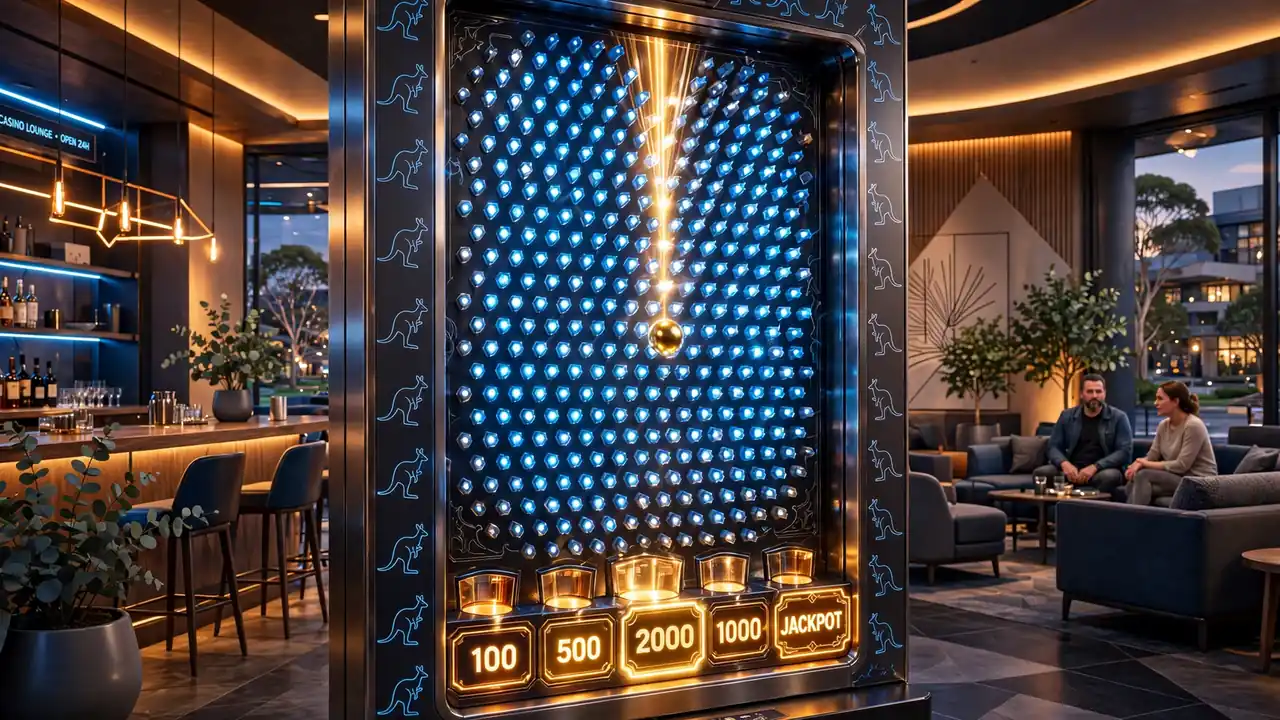
A Plinko-style slot borrows its central image from the familiar pegboard: a ball drops from the top, deflects as it hits pegs, and lands in a lower pocket. The pocket determines the result of that round. Traditional pokies, by contrast, generally display symbols on spinning reels, with the outcome determined by the symbols and the game’s paytable. Both are forms of gambling, but the way a result is presented can feel quite different.
In a Plinko slot, you may be able to choose a stake and settings such as the board’s risk level or the number of rows. Those options can change how results are distributed, but they do not give you control over where the ball lands. A path that looks close to a valuable pocket is not evidence that the next ball will follow a similar route. Each result is uncertain, and previous outcomes do not provide a reliable guide to the next one.
With pokies, a player typically sees reels spin and checks whether a combination of symbols matches a listed result. Some games include extra features, but the basic format is still organised around reels, symbols and a paytable. Plinko replaces that visual sequence with a falling object and a set of possible landing positions. The animation may make the process easier to follow, but it does not make the outcome more predictable.
Top Operators
If you’re looking at Plinko casinos in Australia in 2026, the details below offer a concise reference for what is known about each operator. Use them to focus on the licensing and payment information available for your shortlist.
-
Playfina Casino
- License
- Curacao eGaming (Hollycorn N.V., since 2017)
- Min. deposit
- A$20-30 (depends on the offer)
Playfina Casino is listed with a Curacao eGaming licence held by Hollycorn N.V. since 2017. Its minimum deposit is A$20–30, depending on the offer.
-
7Bit Casino
- License
- Curacao, operated by Dama N.V.
7Bit Casino is operated by Dama N.V. and holds a Curacao licence.
-
LuckyVibe
- License
- Curacao Gaming Control Board OGL/2023/176/0095 (Hollycorn N.V.)
LuckyVibe is associated with Hollycorn N.V. and holds a Curacao Gaming Control Board licence, OGL/2023/176/0095.
-
Thor Casino
- License
- Curacao – Antillephone N.V. (Versus Odds B.V.)
- Min. deposit
- EUR 20
Thor Casino is licensed in Curacao through Antillephone N.V., with Versus Odds B.V. noted as the operator. Its minimum deposit is EUR 20.
-
House of Pokies
- License
- international iGaming licence – jurisdiction not named in the source
- Payout speed
- PayID 1-24 hours
- Min. deposit
- A$30 (PayID from A$10)
House of Pokies lists an international iGaming licence, though the jurisdiction is not named. PayID payouts are listed at 1–24 hours, and the minimum deposit is A$30, or A$10 with PayID.
-
LevelUp Casino
- License
- Curacao eGaming OGL/2023/174/0082 (Dama N.V.)
- Min. deposit
- A$15
LevelUp Casino holds Curacao eGaming licence OGL/2023/174/0082 through Dama N.V. Its minimum deposit is A$15.
-
SkyCrown
- License
- Tobique Gaming Commission
- Payout speed
- crypto ~10-15 minutes, fiat 1-5 days
- Min. deposit
- A$30
SkyCrown is licensed by the Tobique Gaming Commission. Its listed payout times are around 10–15 minutes for crypto and 1–5 days for fiat, with a minimum deposit of A$30.
-
WinSpirit Casino
- License
- Curacao eGaming OGL/2024/923/0383 (Antillephone N.V.)
- Min. deposit
- A$30
WinSpirit Casino holds Curacao eGaming licence OGL/2024/923/0383 through Antillephone N.V. Its minimum deposit is A$30.
-
Kingmaker
- Payout speed
- crypto ~90 minutes, fiat 1-5 days
- Min. deposit
- A$30
Kingmaker lists crypto payouts at around 90 minutes and fiat payouts at 1–5 days. Its minimum deposit is A$30.
-
Lucky Dreams
- License
- Curacao
- Min. deposit
- A$20 (POLi)
Lucky Dreams is listed with a Curacao licence and a minimum deposit of A$20 when using POLi.
What the display can—and cannot—tell you
A board, a bouncing ball and visible pockets can make a Plinko round seem more transparent than a reel spin. You can see the route taken on screen, yet the animation alone does not explain how likely each landing position is or what a particular result is worth. To understand the game, you need its rules and payout information, not just the movement of the ball.
Look for an explanation of how the result is generated, what each pocket pays, and whether any chosen setting changes the possible outcomes or their distribution. If the rules are unclear, or the displayed information does not let you understand the potential loss and return, treat that uncertainty as a reason to stop rather than as a puzzle to solve by playing.
The same care applies to a Plinko-style game presented as a slot machine. A familiar label does not mean its mechanics are identical to a conventional pokie. Nor does a bright interface, fast animation or repeated sequence reveal whether a game is favourable to you. Presentation is not a measure of risk.
Assessing the risk before you play
Start by deciding what you could comfortably lose, and regard that money as spent once you stake it. Do not use money set aside for bills, essentials or other obligations. A gambling result is not wages or a dependable way to cover expenses, and trying to recover losses can make a bad session more costly. If you are under 18, do not gamble.

Next, check the stake controls and the game’s information before committing funds. Consider how quickly repeated rounds could use the amount you have set aside. A game that allows rapid rounds may make it easy to lose track of the total, even when each individual stake seems small. A pause between rounds, a firm spending cap and a decision to stop when that cap is reached can help keep play within a boundary. If you find yourself raising stakes to win back money, or feeling unable to stop, step away and seek support.
Terms such as “low risk” or “high risk” may describe how frequently smaller or larger outcomes occur, but they do not make a particular round safe. A distribution with more modest results can still produce losses; one with occasional larger outcomes can involve long stretches without them. The exact meaning depends on the game’s rules, so do not rely on a label without checking what it means in that game.
RTP, or return to player, is another figure you may encounter. It describes a theoretical return across a very large number of plays, not a promise about what you will receive in a short session. It cannot predict an individual result or turn a gambling game into an income source. The same principle applies when comparing a Plinko slot with a pokie: a headline figure or a visually engaging feature cannot remove the uncertainty of play.
- Decide on a comfortable loss limit and treat it as spent
- Ensure funds are not set aside for bills or essentials
- Check stake controls and game information before committing funds
- Set a firm spending cap and a decision to stop when reached
The distinction is useful, but it should not obscure the shared risk. Whether you watch reels spin or a ball bounce between pegs, you are staking money on an uncertain outcome. Problem gambling can cause serious harm, particularly for people already under financial or emotional strain. If play is affecting your wellbeing, finances or relationships, stop and reach out for help rather than trying to solve the problem through another round.
Plinko Online and the Australian Legal Context
A Plinko game offered for real money through an online casino falls within Australia’s restrictions on interactive gambling. The game’s name or visual format does not create an exception: casino-style online services, including slots and table games, cannot lawfully be provided to people located in Australia under the Interactive Gambling Act 2001. The relevant question is not whether a site calls its product Plinko, a pokie or a live game, but whether it is offering a prohibited online gambling service to customers in Australia.
The law is directed at providers, rather than making an Australian player’s use of an offshore site a criminal offence. That distinction matters, but it does not turn the service into a lawful local casino or remove the practical risks of accessing it. Offshore operators may accept Australian payments while holding licences issued elsewhere. An offshore licence does not authorise them to offer online casino gambling to people in Australia under Australian law.
The Act also sets substantial potential penalties for breaches: the stated maximum daily penalty is $360,000 for an individual and $1.8 million for a body corporate. These are penalties for violating the law, not a fine imposed on a player simply for using an offshore site. The distinction should not be mistaken for an endorsement or assurance that an offshore service is safe, available or protected under Australian rules.
ACMA’s role and website blocking
The Australian Communications and Media Authority (ACMA) is the federal regulator responsible for applying the Interactive Gambling Act and overseeing compliance with federal interactive gambling rules. Its work includes taking enforcement action when prohibited services are offered to Australians. ACMA can ask Australian internet service providers to block access to sites that provide prohibited interactive gambling or advertise it in Australia.
Blocking is a practical enforcement measure, not a declaration that a site has become lawful or that every prohibited service will be inaccessible at all times. ACMA reports that, following enforcement action, it has blocked more than 1,455 illegal gambling and affiliate websites since November 2019. Those figures include affiliate websites as well as gambling sites, so they should not be read as a count of Plinko operators alone.
There is also a difference in published totals for services that have left the Australian market since ACMA began enforcing the rules in 2017. One account says more than 210 illegal services have withdrawn; another gives a figure of over 190. The two figures should not be collapsed into a single precise count. Both describe withdrawals attributed to enforcement, rather than a guarantee that a particular site has permanently ceased operating or cannot reappear under another name.
For a person in Australia, a blocked page can therefore be a sign of regulatory action, not merely a technical fault. A website may change its address, but a new address does not alter the law that applies to services offered to people physically in Australia. Similarly, accepting local payment methods does not establish that an operator is authorised to provide online casino games here. The legal position concerns the service being offered, not just the payment route or the wording used to describe a game.
What the restriction means for Plinko
Whether a game is presented as a digital board, a casino-style attraction or a live-hosted experience does not by itself take it outside the restrictions. Where real money is involved and the service is an online casino game offered to customers in Australia, the Interactive Gambling Act applies. Search labels such as “golden” or “live” do not change that legal framework. Nor does describing a product as a pokie settle its status; what matters is the nature of the service and the circumstances in which it is provided.
The restriction applies to operators offering the service, while players are not criminalised simply for using an offshore site. Still, a lack of criminal liability for a player is not the same as a locally regulated consumer relationship. If an overseas operator disputes a transaction or access to an account, Australian gambling law does not make that operator a lawful domestic provider. A site’s own statements about its location, licence or availability cannot override the Australian rules.

This is a legal distinction, not a judgment about an individual’s reasons for looking at a game. If gambling is causing harm to you or someone close to you, it is worth seeking support rather than treating continued play as a way to recover losses. Gambling is for adults aged 18 or older, and online casino services remain restricted in Australia regardless of a player’s age.
Understanding who ACMA regulates, what its blocking powers do and whom the Act targets helps separate the operator’s legal obligations from a player’s position. It also prevents a common misunderstanding: an offshore site accepting Australian customers or payments is not thereby approved to offer real-money Plinko or other online casino games in Australia.
Real-Money Play, Withdrawals and Cashout Checks
A balance displayed on a gambling site is not the same as money in your bank account. Before treating any figure as withdrawable, you would need to know whether the site permits withdrawals to people in Australia, what conditions apply, and what documentation it requires. That distinction matters for searches about playing Plinko for real money: a game balance can remain inaccessible if a cashout request does not meet the operator’s rules.
For people physically in Australia, real-money online casino services are prohibited under the Interactive Gambling Act 2001. This section is not a recommendation to open an account or use an offshore service. If you encounter one, remember that being able to view a game or submit payment details does not establish that the service may lawfully provide casino games to Australians. Nor does it mean you will be able to recover funds smoothly.
Withdrawal minimums and the balance you can request
Offshore sites commonly set minimum withdrawal thresholds between A$75 and A$150. A balance below the stated threshold may not be eligible for a cashout request, even if it appears in your account. The threshold is not necessarily the only condition: the available balance, the payment route, and any account restrictions may also affect whether a request can be submitted.
Read the withdrawal terms as a whole rather than relying on a prominent claim about payouts. Look for the minimum amount, any stated limits, the permitted withdrawal methods, and whether the same method must be used for deposits and withdrawals. If the terms are unclear or conflict with what an account screen shows, treat that uncertainty as a reason not to send money or personal documents.
It is also important to distinguish a request being accepted from funds being received. A site may show a transaction as pending or processed without that label confirming that the money has arrived in your bank or payment account. Keep records of what the site says, including the withdrawal status and any messages about missing information. Do not assume that a displayed balance is available cash.

Why a first cashout can involve KYC
A first withdrawal commonly brings KYC checks. The operator may ask for identity documents such as a passport or driver’s licence, along with a utility bill. These documents can be used to match the account holder’s identity and address against account details. If the names or information do not match, the request may be delayed while the discrepancy is reviewed.
Think carefully before uploading identity documents to an offshore gambling service. A request for KYC material means sharing sensitive information; it does not itself show that the operator is trustworthy or that a withdrawal will be approved. Check what information is being requested, how it is meant to be submitted, and whether the site provides clear information about handling personal data. Avoid sending documents through an unverified message or link.
Make sure you understand any document requirements before relying on a displayed balance. A photograph that is difficult to read, an outdated bill, or inconsistent account details can create problems. Do not alter documents to make them appear acceptable. If you are uncomfortable providing the requested material, you can stop rather than continuing simply because money is already on the account.
Keep cashing out separate from playing more
A pending withdrawal is not a reason to place further bets. Gambling outcomes cannot guarantee that a balance will grow or that a withdrawal will become easier. Do not chase losses or treat Plinko, pokies, or any other gambling game as a source of income. Gambling can cause serious harm, particularly for people who are vulnerable to losing control. Gambling services are for adults aged 18 or older; that does not make real-money online casinos lawful for people in Australia.
Do
- Keep copies of account messages and transaction records
- Verify the withdrawable amount and stated minimums
- Independently establish the legitimacy of any requested extra payments
Don't
- Use a pending withdrawal as a reason to place further bets
- Chase losses or treat gambling as a source of income
- Send additional money to release funds without verification
If you have already used an offshore site, focus on the information you can verify: the amount shown as withdrawable, the stated minimum, the KYC documents requested, and the status of any cashout. Keep copies of relevant account messages and transaction records. Be wary of demands for extra payments framed as a condition for releasing funds; do not send additional money without independently establishing what the charge is and whether it is legitimate.
A claim that a Plinko cashout is simple or immediate is not a substitute for clear terms or a completed payment. The practical question is not only what the account displays, but whether the withdrawal rules are understandable, whether the identity check can be completed safely, and whether the money actually reaches you. If those points remain uncertain, adding more funds or continuing to play can deepen the problem rather than resolve it.
Plinko Games, Software Providers and Game Names
The label “Plinko” can refer to a ball-and-board game, a digital adaptation, or a slot-style title borrowing the name. Those are not necessarily the same product. A familiar name or visual theme does not, by itself, tell you who made a game, how its rules work, or whether it is available in a particular catalogue. In Australia, this distinction is informational: real-money online casino games are prohibited for people located here.
A digital Plinko-style game is commonly presented around a ball moving through a field of pegs toward a set of outcome spaces. A slot-style game, by contrast, may use Plinko imagery while retaining the structure of a pokie. The title alone is not enough to identify the format. Look for the displayed rules and the named developer when assessing what a game actually is; avoid treating a promotional label as a reliable description.

Provider names offer one clue about the wider game catalogue, but they should not be mistaken for a guarantee about an individual title. Aristocrat, KA Gaming, Microgaming, NetEnt, Play’n GO, Pragmatic Play, Quickspin and Evolution Gaming are examples of companies associated with casino games. Their presence in a catalogue does not establish that they made a particular Plinko game, nor does it show that every game associated with a provider has the same mechanics or return profile.
For KA Gaming slots, stated RTP percentages typically fall between 94% and 96%. That range is relevant only to the provider’s slot titles; it should not be transferred to a Plinko-style game or assumed to describe every KA Gaming release. RTP is a theoretical game figure, not a promise about an individual session or a forecast of what a player will receive.
Some familiar Australian pokie names illustrate why it helps to distinguish a title from a format. Big Red, Lightning Link and Queen of the Nile are examples of named products, not evidence that they are Plinko games. Nor does their appearance alongside a Plinko-labelled item establish that the titles share a developer, rules or features. Names such as Boomerang Bonanza, Kangaliens, Red Sands and Redroo should be treated in the same careful way: a name alone is not enough to make a claim about gameplay or software.
Plinko-style Game
Presented as a ball moving through a field of pegs toward outcome spaces.
Slot-style Game
Uses Plinko imagery but retains the structure of a traditional pokie.
Named Products
Specific titles like Big Red or Lightning Link that are not Plinko games.
When a listing uses the words “Plinko game,” check what is actually described rather than inferring details from the branding. A provider credit, a clear rules panel and an explanation of the game’s outcome structure are more informative than a prominent title or graphic. If those details are absent, there is little basis for comparing the item with another game. This is not a reason to seek out a platform; it is a way to avoid confusing a themed pokie with a distinct ball-and-board format.
For anyone researching game names, keep the questions separate: who developed the title, what format does it use, and what information is disclosed about its operation? A provider’s catalogue may include different kinds of games, so a company name does not answer all three. Likewise, a familiar product name should not be used as proof that a similarly branded title is official or equivalent.
Casino gambling is for adults aged 18 or older, and problem gambling can cause serious harm, particularly for people who are vulnerable. Product descriptions and game labels cannot remove that risk. In Australia, information about Plinko-style games should not be read as an invitation to play real-money casino games.
How to Read a Plinko Casino Review Carefully
A review can look like an independent assessment while relying heavily on claims supplied by the service it discusses. Read each statement according to what could be checked: a named game or provider, a clearly explained feature, or a term shown in the relevant rules is more concrete than a label such as “trusted”, “instant” or “best”. Confident wording is not evidence by itself.
Look for the basis of important claims. Does the review explain how it identified a game or its provider? Does it distinguish observed details from information copied from an operator’s own pages? If it describes a Plinko Rush title, a Plinko Verde-branded game or a deluxe version, the name alone does not establish who made it, how it works or whether it is available to you. Those points need clear, checkable support.
Be particularly cautious when a page uses a familiar public figure’s name alongside casino imagery. A reference to MrBeast and Plinko does not, by itself, show that the person endorses or operates a gambling service. Treat such language as a claim to verify, not proof of a connection. The same applies to polished logos, testimonials and screenshots: appearance can make a page persuasive without confirming its statements.
Notice whether the review gives a date and describes what was actually assessed. A page may mix general explanations with promotional wording, or present an operator’s description as if it were an independent finding. A careful review makes that distinction visible and does not turn uncertainty into a promise. If key statements cannot be traced to clear terms or reliable evidence, give them little weight.
Keep the review’s purpose in view. It can help you understand what a page claims to offer, but it cannot establish that online casino play is safe, suitable or lawful for people in Australia. Real-money online casino services are prohibited for Australian customers under the Interactive Gambling Act 2001. A review’s favourable verdict does not change that position.
If gambling is affecting you or someone close to you, a glowing review is not a reason to continue. Pokies and other gambling can cause serious harm, particularly for people already under pressure. Gambling is for adults aged eighteen or older; if you are younger, do not gamble.
What the 2026 Plinko Casino Search Covers
Interest in Plinko-themed casino games can bring together several different questions: what the name refers to, how a particular game works, and what the surrounding gambling service offers. These are related, but they are not interchangeable. A game’s format does not establish that an operator may lawfully offer it to people in Australia, and a page describing a game is not a recommendation to use an online casino.
The Australian context matters. Under the Interactive Gambling Act 2001, it is illegal for operators to provide real-money online casino games to people physically located in Australia. That includes casino-style games such as slots and table games. ACMA enforces the Act and can ask internet service providers to block access to websites offering prohibited services or advertising them. Offshore sites may accept Australian payments, but that does not make their services locally authorised. Players are not criminalised for using offshore sites; the legal restriction applies to the operators.
The phrase “Plinko casino” may also point to different kinds of material. Some pages discuss a game’s mechanics or name; others focus on software providers, promotional conditions, or the practicalities of payments. Those subjects need separate scrutiny. A familiar game title does not tell you what rules apply to a particular version, while promotional wording alone cannot establish the status of the service behind it.
Site availability, terms and access can vary. ACMA’s blocking activity is one reason a page or service encountered online should not be assumed to remain accessible or lawful for operators to provide.
Readers may also encounter material about Plinko casinos in other countries. That information should not be transferred automatically to Australia: another country’s rules, services and access conditions do not determine what applies to someone physically located here. Keep the distinction clear between information about a game, information about an offshore gambling service, and the Australian legal position. This scope helps make sense of the subject without treating an online casino as an appropriate option for Australian residents.
Free Play and What It Can—and Cannot—Tell You
A free-play version can show you the basic sequence of a Plinko-style game: where a ball enters, how it moves through pins and how the board displays an outcome. That can help you understand the format without staking money. It is a limited preview, not a test of what would happen in real-money play.
The distinction matters because a demo result does not predict a later result. Free play may use a different setup from a paid version, and even when the visible game looks identical, one run cannot establish how it will behave over time. Treat the display as an illustration of the rules, not evidence that a particular outcome is likely or that money can be made.
Limitations of Free Play
Free-play versions are limited previews and not tests of real-money play. A demo result does not predict a later result, and the setup may differ from the paid version.
Some people looking for a free Plinko-style slot may instead find a named game or a board-based game with a similar layout. Check what the demonstration actually lets you do: whether it explains the rules, allows repeated rounds, or simply shows a short preview. A title that includes “free” does not by itself explain the game’s mechanics or the conditions attached to any promotion.
Free spins are also different from an unrestricted demo. They may be offered under promotional terms, and any resulting funds may not be cash available to withdraw. Read the conditions rather than assuming that free spins work like ordinary free play; wagering requirements can apply.
A free version cannot verify how a real-money service handles deposits, account checks, or withdrawals, and it says nothing about whether such a service is lawful for people in Australia. Do not treat a demo as an invitation to deposit or as reassurance about an operator.
If you are under 18, do not gamble. If play is becoming difficult to control, step away and seek support; gambling can cause serious harm, particularly for people who are vulnerable. Free play may help you recognise a format, but it cannot remove those risks or establish that paid play is safe for you.
Crypto Payments and the Costs of Conversion
Crypto can make a withdrawal appear quick while leaving you with less value than the displayed balance suggests. A specialist review reports that crypto withdrawals can clear faster than other methods, but network fees and conversion spreads may reduce the amount received. Speed and final value are separate considerations.
A network fee is taken for processing a transaction on the relevant blockchain. A conversion spread is the difference between the rate used to exchange one currency for another and a reference market rate. Depending on the route, a balance may be converted when it is sent, when it reaches a wallet, or when you exchange it into Australian dollars. Each step can affect what is ultimately available to you.
If you encounter a Plinko game presented alongside crypto payments, check what currency the balance is actually held in and where conversion occurs. A displayed crypto amount is not necessarily the Australian-dollar value you will receive. The rate may move between the time a withdrawal is requested and the time you convert the funds, so the final amount can differ from an earlier estimate.
Read the payment terms for the stated network fee, any platform charge, the conversion method and the currency used for settlement. If those details are unclear, a fast processing claim alone tells you little about the net result. Keep a record of the amount requested, the amount received and any fees shown; this can help identify where a difference arose.
Crypto also does not remove the need to consider the service itself. A crypto casino offering Plinko remains an online casino service, and using a digital asset does not change the Australian legal context. Avoid treating crypto as a way to bypass restrictions or as a guarantee of privacy or payment. Before making financial decisions, consider whether you can afford to lose the full amount involved. Gambling can cause serious harm, particularly for people already under financial or emotional strain.
Bonus Terms: Wagering Requirements and Game Contributions
A bonus is not cash simply because it appears in an account balance. Its terms may restrict when bonus-derived winnings become eligible for withdrawal, and failing to meet those conditions can mean the balance cannot be withdrawn. Treat any advertised Plinko bonus as a set of contractual conditions to examine, not as extra money available to spend freely.
A wagering requirement states how much qualifying betting must take place before the relevant winnings can be withdrawn. For scale, a specialist review described a $100 bonus with a 40-times requirement: the stated calculation meant $4,000 in bets before bonus-derived winnings became eligible. That is one reported offer, not a standard applying to every bonus. The amount of wagering, the deadline, and which games count can all depend on the specific terms.
Game contribution rates matter because a bet may count for only part of its value. A specialist review reported blackjack contributing 10% toward wagering requirements. Under that condition, a bet on blackjack would advance the requirement less than a game credited in full. Do not assume that a Plinko game, slots, or table games contribute equally; check the written rules for the named game and any exclusions.
Read the conditions for the bonus itself, not just a headline promising a no-deposit offer. Check whether the requirement applies to the bonus, winnings, or both; which games qualify; any maximum bet while wagering; and what happens if the conditions are not completed. Terms can change, so a description copied elsewhere may not match the offer displayed.
For Australian readers, these details are not an invitation to use an online casino. Real-money online casino services are prohibited for people in Australia under the Interactive Gambling Act 2001. Anyone considering gambling must be an adult, and it is worth remembering that gambling can cause serious harm to vulnerable people.
Lucky Plinko Searches in the Context of Australian Pokies
Words such as “lucky” or “casino expert” can make a gambling product sound more predictable or more carefully assessed than it is. They are labels, not evidence of a game’s design, odds or likely outcome. Figures about Australian pokies offer useful local context, but they cannot establish anything about Plinko itself.
A report published by gamble.com.au put Victorian losses on poker machines at $2.6 billion for the year it covered, more than $44.7 million above the 2015 figure. The same report said the Epping Plaza Hotel in Melbourne’s north took in over $21 million from its 100 machines during the reported year. These figures concern physical poker machines in Victoria; they should not be read as measurements of online games or as evidence that any Plinko product behaves like a pokie.
The scale of pokie losses has also informed proposals for tighter controls. Senator Nick Xenophon and MP Andrew Wilkie proposed limiting poker-machine bets to $1. A proposal is not the same as an enacted rule, and it relates to poker machines, not Plinko.
If you are weighing up gambling information, keep the categories separate: a local figure about pokies describes activity in that setting, while a product label tells you little about risk. Do not treat “lucky” branding as a sign that losses are less likely, or that play can provide income. Gambling can cause serious harm, particularly for people who are vulnerable to it. Gambling is for adults aged 18 or over; if you are concerned about your own gambling or someone else’s, seek support rather than relying on promotional claims.